The Collective Feminist Principles

The Future is Collaborative, Feminist, and Inclusive

The aspiration for a world that works for 100% of humanity and the planet is hampered by traditional power structures and patriarchal systems that have historically marginalized and disempowered women. Gender-based inequalities persist across various spheres of life, perpetuating discrimination that often intersects with other forms of marginalization based on race, disability, and other factors. The Collective Feminist Principles provide a robust foundation for advancing gender equity and justice in all spheres of life. They emphasize the importance of building supportive networks, practicing solidarity, and empowering women to claim authority in shaping feminist futures.

What Are the Collective Feminist Principles?

The Collective Feminist Principles are six mutually supportive principles for implementing a more feminist leadership practice. They provide guidance for reflection and action, helping women co-create spaces that reduce typical power pathologies in cultures shaped by patriarchy, such as toxic competition and harmful hierarchies.

These Principles explicitly recognize that discrimination based on gender can interact and intersect with other discriminations. They serve as a call to action for consciously cultivating inclusive and transformative practices that acknowledge and uplift women’s voices, experiences, and perspectives for the benefit of all of humanity.

Why These Principles Are Needed

The Collective Leadership Institute works toward creating a world that works for 100% of humanity and the planet. This aspiration requires acknowledging and transforming the patriarchal systems that have perpetuated gender-based inequalities. Traditional power structures have historically marginalized women across various domains, from workplaces to community organizing, from policy-making to sustainability initiatives.

These structural inequalities don’t exist in isolation. They intersect with other forms of discrimination and shape how women experience and participate in collaborative work for sustainability. Addressing these challenges requires more than individual action or goodwill. It calls for principles that guide collective practice and create conditions where women can lead transformation without reproducing the very power structures they seek to change.

The Purpose They Serve

The Collective Feminist Principles serve multiple purposes. They provide a framework for reducing power pathologies that emerge in patriarchal cultures, creating spaces where women can collaborate without falling into patterns of toxic competition or harmful hierarchies. They offer guidance for building supportive networks and practicing solidarity across differences.

Most importantly, these Principles empower women to claim authority in shaping feminist futures. They recognize that as those most negatively affected by patriarchal power structures, women should lead the thinking and action behind transforming them. The Principles support this leadership by providing elements to consider in order to truly support change without reproducing existing power dynamics.


How to Use the Principles

The Collective Feminist Principles are designed for flexibility and adaptation. Each group of women in any given context should decide for themselves if, how much, and how exactly they can and would like to use them, and how to adapt them to their context.

This approach respects the diversity of women’s experiences and choices. It recognizes that explicit actions on feminism often depend on different types of privilege, including personal safety considerations for every woman that need to be respected. What works in one context may not be appropriate or safe in another.

Three Levels of Application

Individual Level
The Principles support personal reflection on feminist practice among and with other women in general. They help individuals examine their own patterns, biases, and opportunities for growth in feminist practice.

Team Level
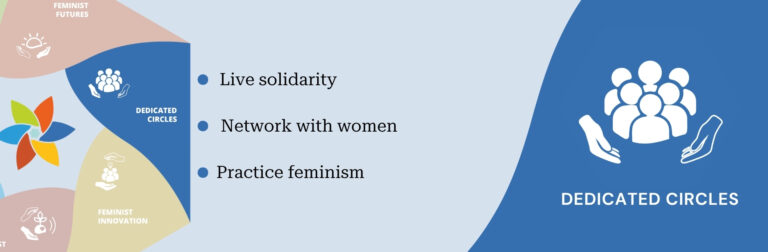
Groups can use the Principles to develop a learning, support, and action network on feminism. This creates dedicated circles where women can explore feminist approaches to collaboration and leadership together.

Organizational and Multi-Stakeholder Level
The Principles enable gender mainstreaming through a collective and needs-based approach. They provide structure for bringing feminist perspectives into organizational culture and multi-stakeholder collaboration for sustainability.

Getting Started

A first step in using the Principles is to reflect on how they can best be tailored to each given local context. This may include focusing on a specific feminist issue such as care work, the gender pay gap, domestic abuse, or other concerns relevant to the particular group and context.


Important Clarifications

Understanding what the Collective Feminist Principles are not is as important as understanding what they are. Several clarifications help frame their purpose and use appropriately.

No Claim for Universal Applicability
The Principles do not make a claim for universal applicability. Rather, they provide guidance for reflection and adaptation within each culture, community, and context. Different settings will require different interpretations and applications.

No Specific Type of Feminism
The Principles do not advocate for a particular type of feminism beyond the general understanding of recognizing marginalization of women. They respect the diverse feminist traditions and approaches that exist across cultures and communities.

Beyond Self-Care
While self-care has its place, these Principles go beyond it. They have a dedicated perspective to bring feminist perspectives and action into collective sustainability work, addressing systemic change rather than only individual wellbeing.

Not About Perfection
The Principles do not ask for perfection in practice. They serve as a reflection, learning, and unlearning guidance. The emphasis is on continuous growth rather than achieving an ideal state.

Distinguishing Female from Feminist Leadership
The Principles recognize the important difference between female leadership and feminist leadership. Being a woman in leadership does not automatically mean practicing feminist leadership, and feminist leadership can be practiced by anyone committed to transforming patriarchal structures.

The Thinking Behind the Principles

The Collective Feminist Principles are intended as a practice for and by circles of women. This intentional focus stems from the recognition that those most negatively affected by patriarchal power structures should lead the thinking and action behind transforming them.

The Principles provide guidance on which elements need to be taken into consideration to truly support this cause without reproducing power structures. They are designed to respect, reflect, and be adapted to different cultural understandings and recognitions of “woman,” based on what each circle of women in any given place and time decides for themselves.

This approach acknowledges that concepts of gender and womanhood vary across cultures and contexts. The Principles honor this diversity while maintaining focus on the shared experience of marginalization under patriarchal systems and the collective work of transformation.

Learn more about Collective Feminist Principles

CLI's courses are designed for professionals who work with diverse stakeholders and want to strengthen their collaborative leadership practice.

Frequently Asked Questions

The Principles are designed for circles of women who want to practice feminist leadership in their work for sustainability and social change. They can be used individually, in teams, or in organizational settings.

No. The Principles do not advocate for a specific type of feminism beyond recognizing the marginalization of women. They respect diverse feminist traditions and approaches.

The Principles are intended as a practice for and by circles of women, recognizing that those most affected by patriarchal structures should lead their transformation. However, the insights gained can inform work in mixed-gender settings.


The Collective Feminist Principles specifically address power pathologies that emerge in patriarchal systems. They focus on building solidarity, reducing toxic competition, and creating space for women to claim authority in shaping futures.


The Principles recognize that explicit actions on feminism depend on different types of privilege, including personal safety considerations. Each group decides how much and how exactly to use them based on their context and safety needs.

While developed within a particular context, the Principles are designed to be adapted to different cultural understandings. They provide guidance for reflection rather than prescriptive rules, allowing each group to interpret and apply them appropriately.

The Feminist Principles complement the Compass methodology. The Art of Feminist Leadership course specifically explores how to apply Compass dimensions through a feminist lens.

While the Principles are for practice by circles of women, understanding them can help anyone committed to transforming patriarchal structures in their work. The focus remains on centering women’s leadership in this transformation.

Resources and Tools
Assessment Guide

The full Collective Feminist Principles include detailed guidance for practice and assessment. This guide supports groups in reflecting on how they’re applying the Principles and where they might focus their development.

Download Assessment Guide

Glossary

As with any good dialogue, shared understanding of key concepts is vital for all involved. Feminism is often troubled by different understandings of concepts. CLI has developed a glossary that clarifies the understanding of feminism and related key concepts used in conversations about it.

Download Glossary

Moving Forward

The Collective Feminist Principles offer a framework for women to lead transformation of patriarchal power structures in sustainability work and beyond. They provide guidance without prescribing universal solutions, respecting the diversity of contexts, cultures, and feminist approaches while maintaining focus on collective action for gender equity and justice.

Using these Principles is an ongoing practice of reflection, learning, and unlearning. It requires courage to examine power dynamics, humility to recognize one’s own biases, and commitment to building solidarity across differences. Most importantly, it requires trust in the collective wisdom of women to shape feminist futures that benefit all of humanity.